Education
How Does an RO Water Purifier Work? A Simple Guide
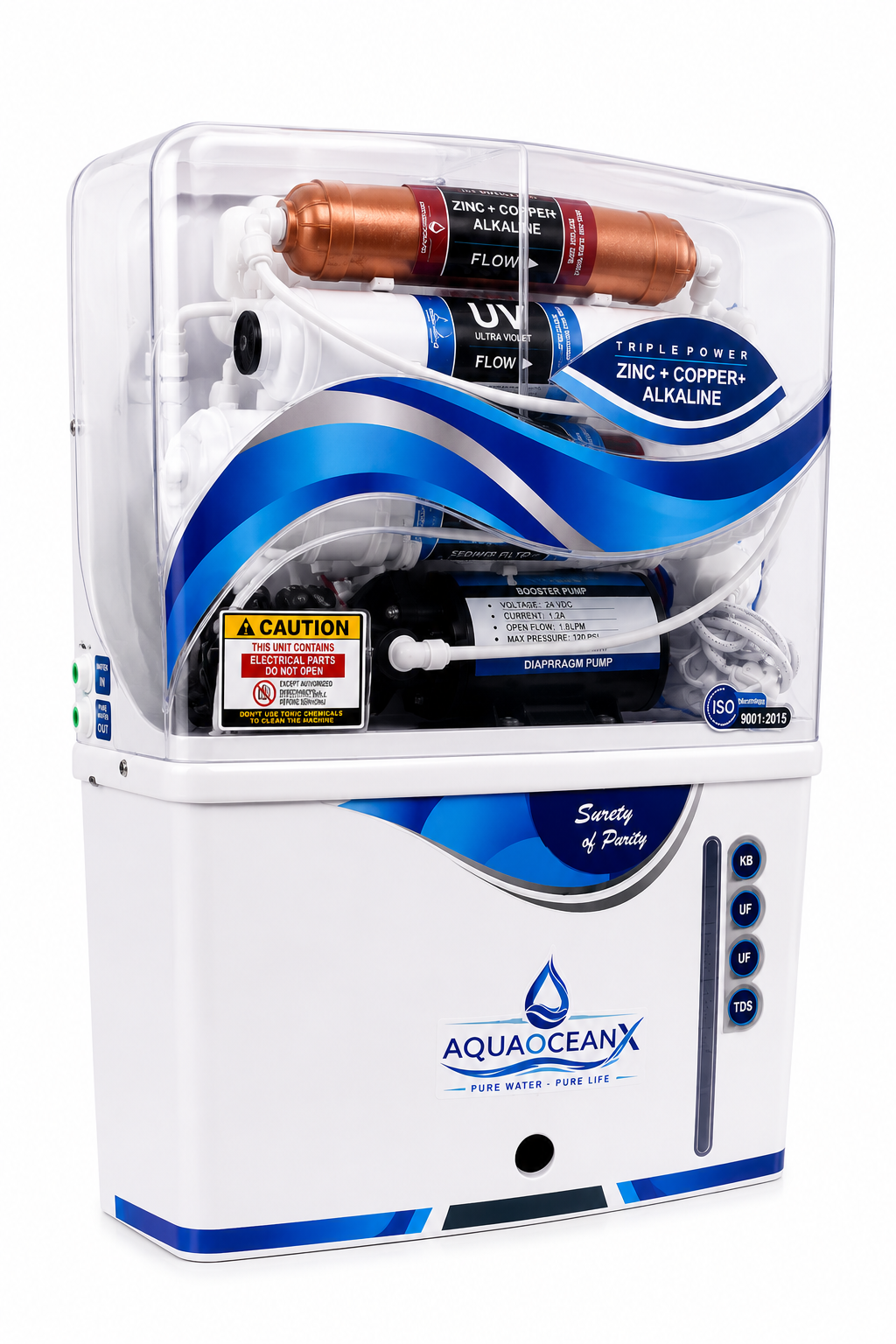
What Reverse Osmosis Actually Does
Reverse Osmosis (RO) uses pressure to push water through a super-fine membrane that blocks dissolved salts, heavy metals, pesticides and other impurities. The membrane holes are 0.0001 microns — small enough to stop contaminants while letting water molecules through.
This is why RO is essential where TDS (Total Dissolved Solids) is high. In cities like Raipur with hard, high-TDS borewell and municipal water, only an RO stage reliably brings TDS down to safe drinking levels.
The 5 Stages in Every Good RO
A standard domestic RO purifier passes water through five stages. Each one has a specific job:
- Stage 1 — Sediment filter: removes sand, rust and visible particles that would clog the system
- Stage 2 — Pre-carbon filter: removes chlorine and organic compounds that would damage the membrane
- Stage 3 — RO membrane: the heart of the system, removes dissolved salts, heavy metals and 90-95% of TDS
- Stage 4 — Post-carbon / UV stage: polishes taste and kills bacteria and viruses
- Stage 5 — Mineral/alkaline cartridge: restores beneficial minerals and balances pH for better-tasting water
Why UV and UF Are Added (RO + UV + UF)
RO removes chemicals and salts but does not guarantee 100% disinfection in every situation. Adding UV (ultraviolet light) kills bacteria and viruses, while UF (ultrafiltration) blocks larger microbes as a final safety net.
For households on municipal supply, a 5-stage RO+UF is usually enough. For those mixing borewell or tanker water, an RO+UV+UF system like the AQUAOCEAN Pro gives complete protection.
What Happens to the Rejected Water
RO systems reject a portion of water carrying the concentrated impurities. Modern machines like ours keep rejection low at 1:1 to 1:1.5 — you get one litre of pure water for every one to one-and-a-half litres used. This reject water can be reused for mopping, gardening or washing.
How to Know Your RO Is Working
Test the TDS of your purified water annually (a simple TDS meter costs ₹200-₹500). If output TDS rises above 50-100, or your water tastes flat, the membrane or filters need attention. Our free service check includes TDS testing and filter inspection.
Frequently Asked Questions
Does RO remove essential minerals?
RO removes dissolved solids, including some minerals. Good RO purifiers add a mineral or alkaline stage that restores calcium, magnesium and other beneficial minerals after purification.
How much water does an RO waste?
Modern machines reject only 1:1 to 1:1.5 — much better than older 1:3 systems. The reject water can be reused for household chores.
Is RO water safe for babies?
Yes, when the machine is properly maintained and filters are changed on schedule. The mineral stage also ensures the water is not stripped of essential nutrients.
Need a purifier for your home?
Rent from ₹299/month or buy from ₹9,999 — free installation, warranty and maintenance.